
Sometimes my favorite moments as an instructor isn't teaching someone how to trim a sail, execute a perfect anchoring maneuver, or read a chart.
It's the moment a student starts thinking like a skipper.
Whether someone wants to run the boat or be an exceptional crew member, understanding how the entire system works makes everyone a stronger sailor. But one role carries a little more responsibility than the others: Skipper.
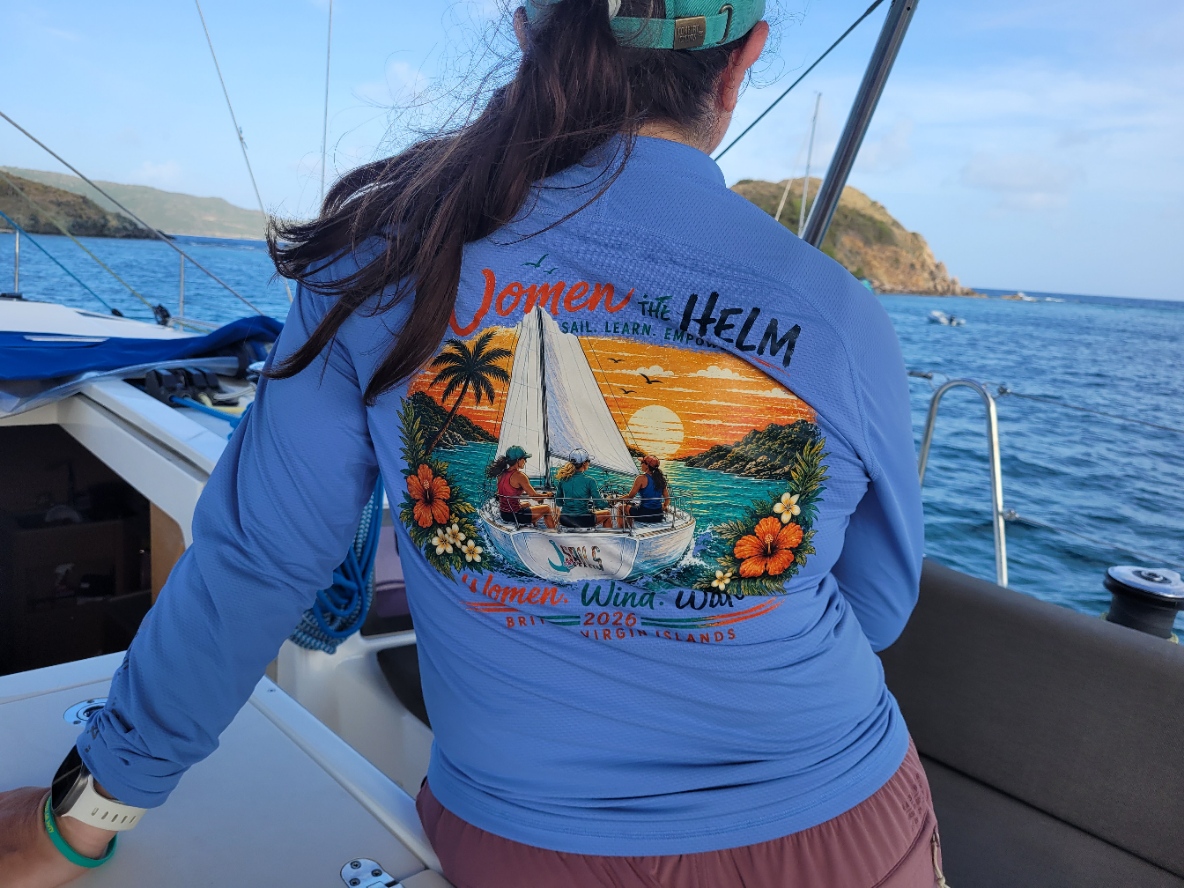
This week in the British Virgin Islands, we had six women sailing on two boats, with two students and one instructor aboard each vessel.
Jackie Busch and I spent the week helping our sailors build skills, confidence, and experience through a structured role-assignment system designed to expose them to the many responsibilities involved in operating a charter boat.
Everyone gets a turn in different roles, each with its own responsibilities and learning opportunities. Some women come on these trips with the goal of eventually chartering their own boat and becoming skipper. Others want to build confidence, expand their sailing skills, and become highly capable crew members.
Both paths are equally important.
In fact, everyone is learning the same core skills throughout the week: communication, navigation, sail handling, weather interpretation, teamwork, decision-making, and situational awareness. The difference isn't in what they're learning—it's whether they ultimately want the responsibility of being the person making the final decision for the vessel.


Learning the Role of Skipper
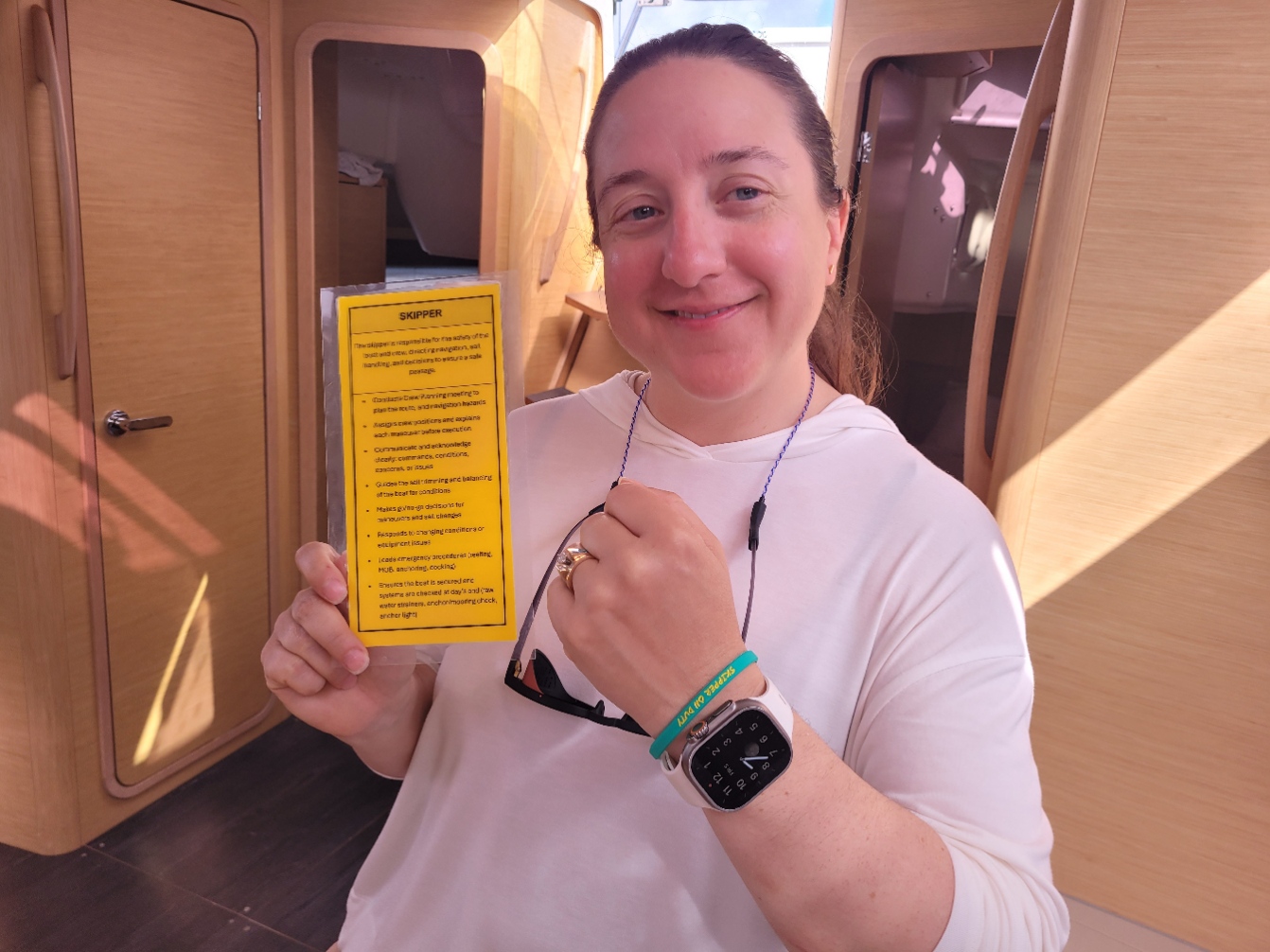
When you're serving as skipper for the day, you're responsible for much more than steering the boat.
You're leading the morning crew planning meeting.
You're reviewing the weather and discussing how it might impact the day's plans.
You're assigning responsibilities to the crew.
You're making navigation decisions.
You're communicating clearly.
You're thinking ahead.
Most importantly, you're developing one of the most important skills we teach throughout the week: Situational Awareness.
We talk about Situational Awareness constantly because it's what allows a sailor to stay ahead of the boat instead of simply reacting to it.
It might mean noticing that a crew member is about to put themselves in an awkward position during a maneuver and offering guidance before it becomes a problem. It might mean anticipating how the wind, current, or the boat will respond to a sail adjustment. Sometimes it's simply recognizing a more efficient way to accomplish a task.
The best skippers aren't necessarily the ones who know the most sailing terminology.
They're the ones who consistently observe, anticipate, communicate, and adapt. That's the shift we're looking for. At the beginning of the week, many sailors naturally look to the instructor for answers. That's completely normal.
But as the days go on, something starts to change.
Instead of asking, "What should we do?"
They begin saying, "Here's what I think is going to happen."
That's when we know they're starting to think like skippers.
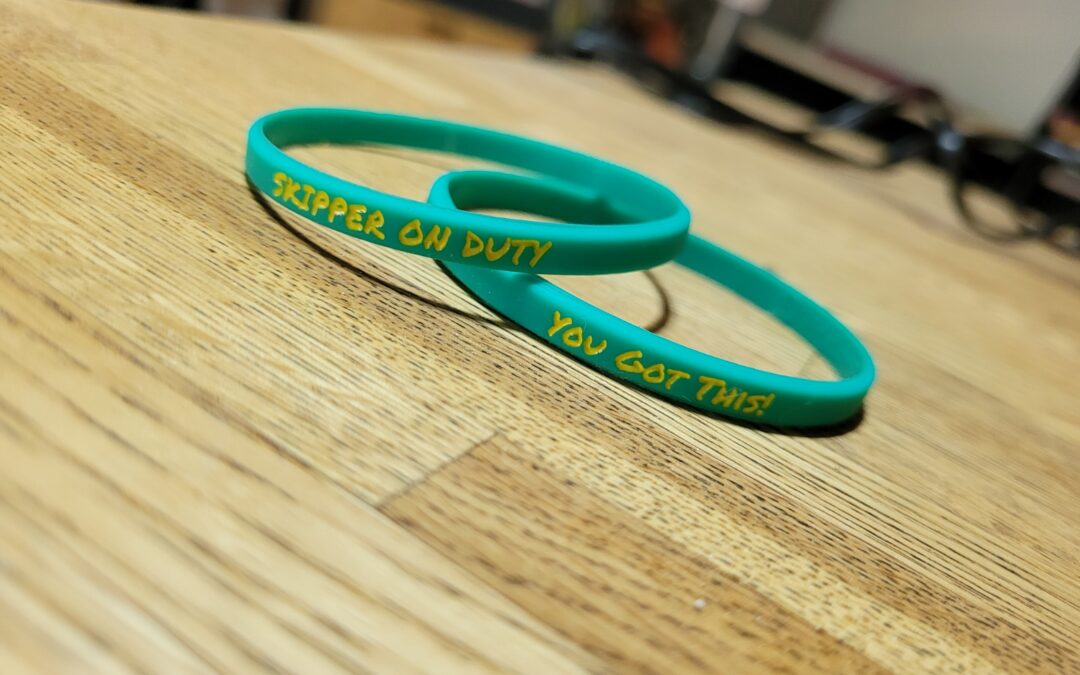
The Skipper Bracelet
The Skipper Bracelet was a brand-new idea for this trip. Before we left for the BVI, Jackie and I thought it would be a fun way to help students step into the role of skipper. The original plan was simple: rotate the bracelet each day so every student had an opportunity to experience being the Skipper on Duty.
The bracelet would serve as a reminder that they were responsible for leading the crew, thinking ahead, making decisions, and managing the flow of the day. But as often happens in sailing, the plan changed.
One of the things we believe strongly is that every sailor comes to our program with different goals. Some women want to charter their own boats and eventually become skippers. Others want to become stronger crew members, build confidence, deepen their sailing knowledge, and enjoy being part of a capable team.
Neither goal is more important than the other.
Our job isn't to force someone into a role they don't want.
Our job is to help them grow toward the goals that matter to them.
That doesn't mean we won't encourage someone to stretch beyond their comfort zone. In fact, we do that all the time. Sometimes what looks like a limit is really just a lack of confidence, and a little encouragement can help someone discover they're capable of much more than they thought.
This group taught us something important.
As the week progressed, it became clear that the bracelet meant more when it wasn't automatically assigned.
Both Jackie and I noticed the same thing.
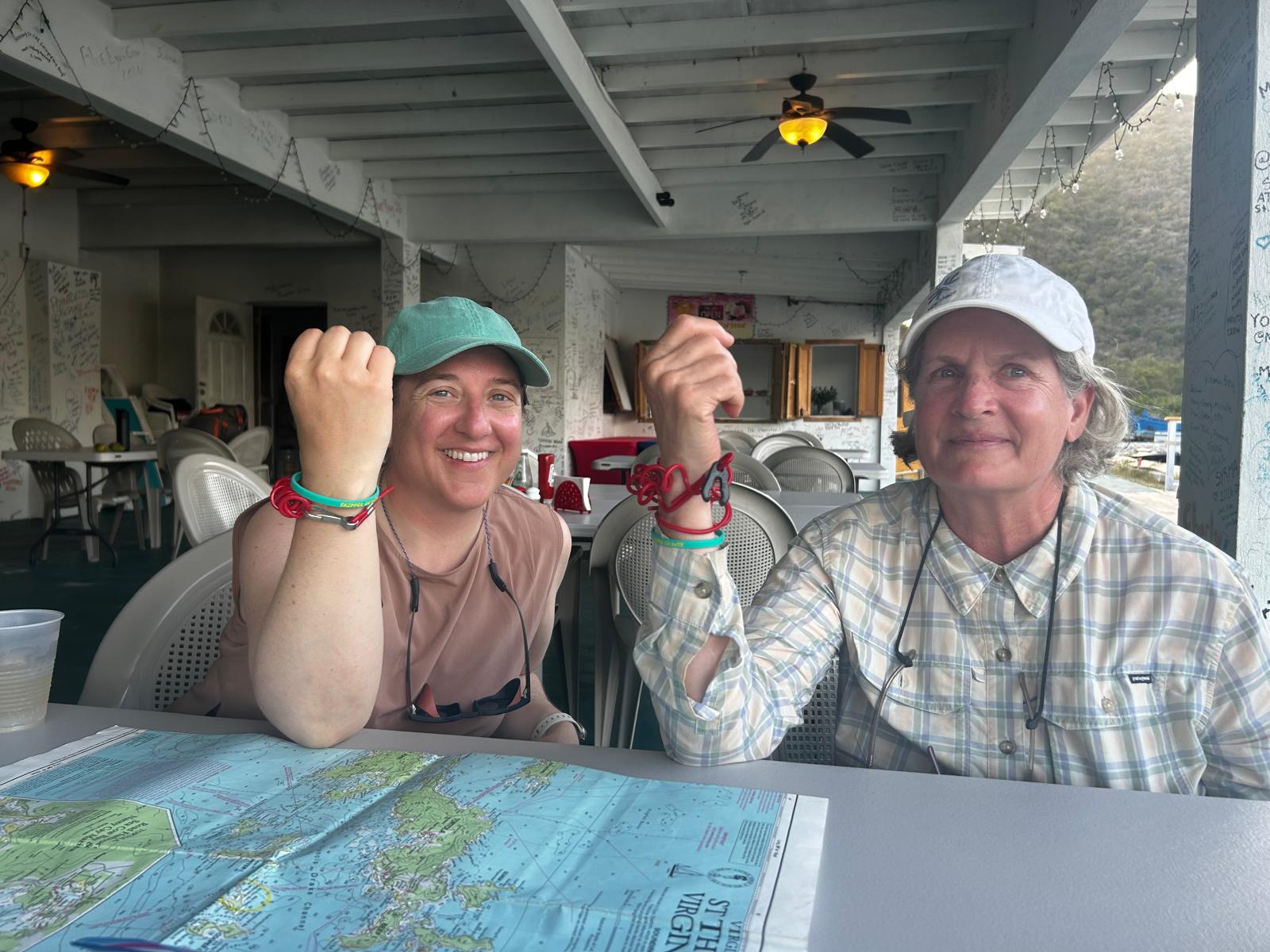
Receiving the bracelet became a form of recognition.
Not recognition for being the best sailor aboard, but recognition that a student was beginning to demonstrate the judgment, situational awareness, communication skills, and leadership we look for in a skipper.
About midway through the week, two sailors started showing those signs consistently.
They were anticipating what might happen before it happened.
They were communicating clearly with their crews.
They were evaluating options and making thoughtful decisions.
They were beginning to see the bigger picture instead of focusing solely on the task immediately in front of them.
Most importantly, they were earning our trust.
Trust that they could serve as Skipper on Duty while still having a coach nearby to help them work through the moments where a little extra guidance was needed.
That's when Jackie and I looked at each other and knew the bracelet had found its purpose.
It wasn't an assignment. It wasn't a reward.
It was recognition.
Recognition that a sailor was beginning the transition from following directions to leading the boat.
Confidence Comes From Ownership
One thing I've learned over the years is that confidence doesn't come from watching.
It doesn't come from reading.
It doesn't even come from successfully completing a maneuver once or twice.
Confidence comes from ownership.
From making decisions.
From accepting responsibility.
From realizing that you can assess a situation, develop a plan, communicate it to your crew, and adapt when things don't go exactly as expected.
As instructors, we're always there to provide guidance and maintain a safe learning environment. But the goal is never for students to rely on us.
The goal is for them to rely on themselves.
The bracelet became a visible marker of that transition. A recognition that a sailor is beginning to trust her skills, trust her judgment, and step into the role of skipper.
So Much More Than a Bracelet ...
By the end of the week, both women were confidently building the daily sail plan, discussing weather strategy, and managing the countless small decisions that skippers make throughout the day.
The bracelet wasn't even what we originally intended it to be. Instead, it became a symbol of something far more meaningful.
A symbol that a sailor had begun to develop the awareness, judgment, and confidence needed to take responsibility for the boat, the crew, and the decisions that come with being in command.
And watching that transformation happen is one of the reasons I love doing this work.
Because sailing isn't really about boats. It's about helping people discover they're capable of more than they thought. Sometimes all it takes is a simple bracelet to help them see it, too.